
Originally published on Substack. Reprinted here with permission, unedited.
Finding Direction in an Ever-Changing World
We often imagine that if we could solve enough problems, we would finally arrive at peace.
If our finances were secure. If our health improved. If work became easier. If our relationships settled down. If technology handled the tedious parts of life. We imagine a future where suffering gradually recedes until fulfillment naturally takes its place.
I’m not convinced.
When I watch people, including myself, I notice something curious. As soon as one challenge disappears, another quietly takes its place. We finish one project and immediately begin searching for the next. We renovate the house, then begin imagining a different home. We reach a long-awaited goal, enjoy it for a while, and before long find ourselves asking the familiar question:
What’s next?
It’s tempting to call this dissatisfaction. Some would argue that human beings are simply incapable of appreciating what they have. Others might see it as greed, ambition, or restlessness. I don’t think that’s what’s happening.
After reflecting on my own life, and after spending thousands of hours sitting with people in my therapy office, I’ve come to believe we’re observing something much more fundamental.
Human beings are creatures of movement. Even when our bodies are still, our minds continue to wander. Our attention moves. Our hopes move. Our fears move. Our imagination reaches toward futures that have not yet arrived. Whether consciously or unconsciously, we are always orienting ourselves toward something just beyond where we are.
Perhaps the deepest question in life isn’t whether we will strive. Perhaps it’s what our striving is pointing toward.
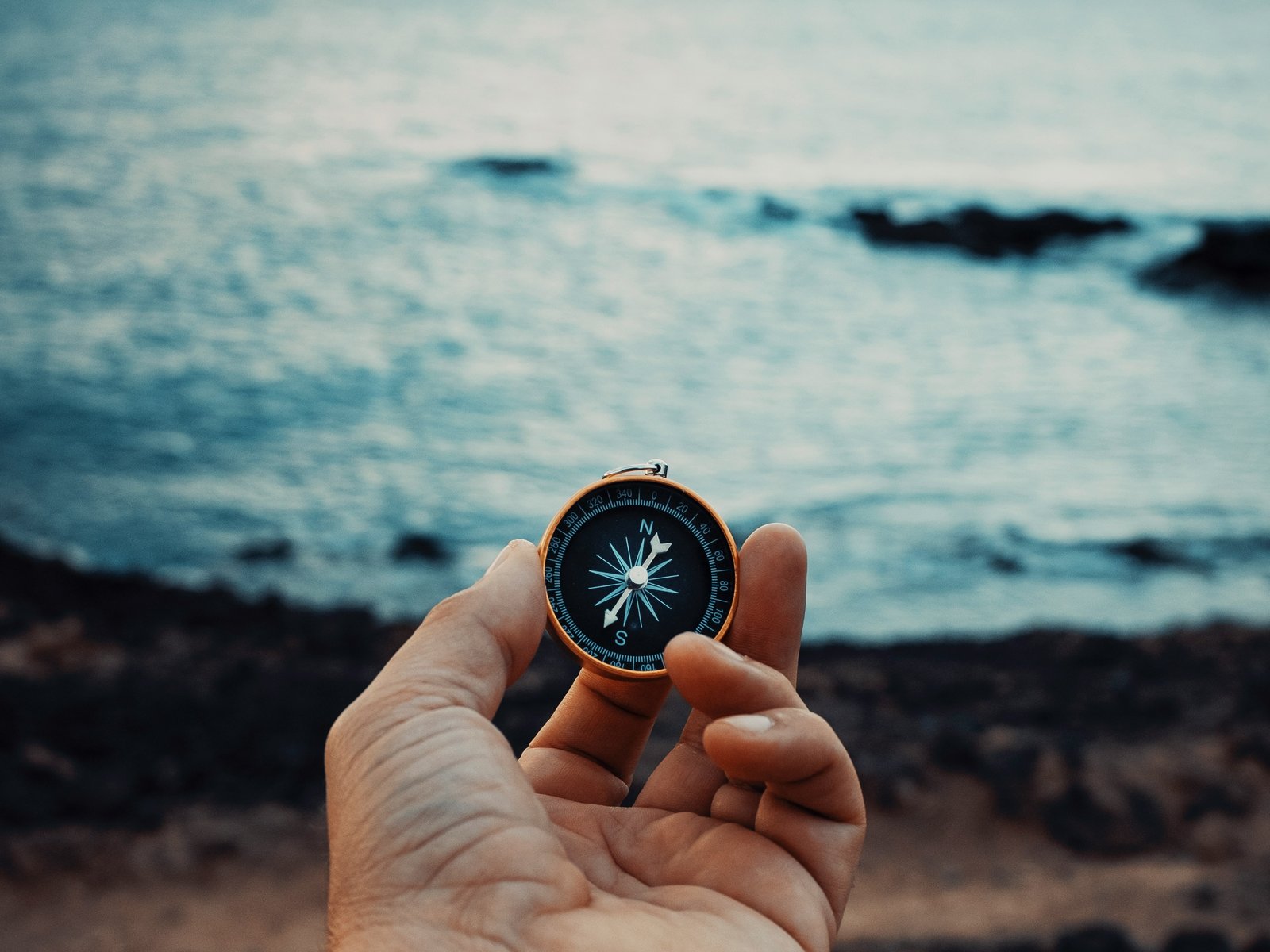
I’ve come to think of this as our human compass.
Perhaps the deepest question in life isn’t whether we will strive. Perhaps it’s what our striving is pointing toward.
— Dr. Josh Maddox, "The Human Compass"
Every one of us is navigating. Every decision, every ambition, every fear, and every dream quietly points us in a direction. The compass itself is neither good nor bad. Like any compass, its value lies not in the fact that it points, but in where it leads us.
As I’ve continued to reflect on this idea, one pattern keeps resurfacing. However different our lives may appear on the surface, our deepest orientations seem to express themselves in a handful of recurring ways.
Sometimes our compass points toward creating. We build businesses, write books, raise children, plant gardens, prepare meals, solve problems, and imagine futures that don’t yet exist. Creation is our attempt to leave the world somehow different from the way we found it. It is our way of participating in what comes next.
At other times, our compass points toward transformation. Life asks us to release identities that no longer fit, challenge beliefs that have become too small, grieve what has been lost, or end relationships that can no longer sustain growth. Transformation is often mistaken for destruction, but more often it is the difficult work of making room for something truer.
Yet human beings cannot live on effort alone. We also orient ourselves through receiving. We receive nourishment from food, wisdom from teachers, beauty from music, awe from nature, comfort from friendship, and rest after meaningful work. Some of life’s greatest gifts cannot be manufactured. They can only be accepted.
And ultimately, our compass leads us toward relationship. Long before we know who we are, we are shaped by those who care for us. Long after our accomplishments have faded, it is often our relationships that define the life we have lived. We search for belonging, intimacy, understanding, forgiveness, and love because none of us was meant to exist entirely alone.
We create.
We transform.
We receive.
We relate.
Not because they describe everything about human life, but because they seem to capture the places where our deepest orientations repeatedly find expression.
None of these expressions is inherently virtuous, nor is any one inherently dangerous. Each can become distorted.
Creation can become endless achievement, where productivity quietly replaces identity. Transformation can become cynicism, where tearing things down feels easier than building something worthwhile. Receiving can become consumption, where pleasure slowly crowds out gratitude. Even relationships can become unhealthy when connection is replaced by dependency or the fear of being alone.
The behavior itself is rarely the deepest issue.
Orientation is.
Two people can build the same company, pursue the same career, write the same book, or devote themselves to the same cause for entirely different reasons. Outwardly, their lives may look remarkably similar. Inwardly, they are moving in opposite directions.
That realization has gradually changed the kinds of questions I ask. I’m less interested in asking whether a particular behavior is healthy or unhealthy in isolation. I’m far more interested in asking what a person’s life is oriented toward, what they hope this achievement, this relationship, this purchase, this ambition, or this sacrifice will ultimately give them. Those questions reveal far more than the behavior ever could.
I don’t believe the goal of life is to eliminate striving, nor do I think we were designed to become motionless. Human beings are meant to move. The deeper question is whether that movement has direction, whether the things we create, the things we transform, the things we receive, and the relationships we cultivate are gradually orienting us toward a life that feels more honest, more connected, and more deeply our own.
Perhaps that is the work of a lifetime, not finding a destination where striving finally ends, but learning to navigate faithfully while life continues to change around us.
Our compass will drift. We will mistake distraction for purpose, achievement for identity, and comfort for peace. Every life wanders eventually. The question isn’t whether we’ll lose our way. It’s whether we’ll recognize it when we do and have the courage to begin again.
Because a meaningful life isn’t built by never becoming lost.
It’s built by repeatedly finding our way home.